Understanding Cremation
More American families now choose cremation than burial, and most still have questions they feel awkward asking.
Ask them. There is nothing on this subject we will not explain plainly, and no question we have not heard before.
For the services themselves, see our Cremation Services page, or call (575) 342-1005.
What New Mexico Requires
Cremation cannot be undone, so the law puts several checks in front of it. In New Mexico, no cremation may take place until:
- The authorizing agent — the person with the legal right to decide — has signed a written authorization
- A cremation permit has been issued by the state Office of the Medical Investigator
- The death certificate has been filed, and any other forms the crematory requires are complete
That process takes time, and it is the reason cremation does not happen the day after a death. We obtain the permit and handle the filings.
If the death falls under the Office of the Medical Investigator’s jurisdiction, their review comes first. We will keep you posted on where things stand rather than leaving you to wonder.

A Service Is Still Possible
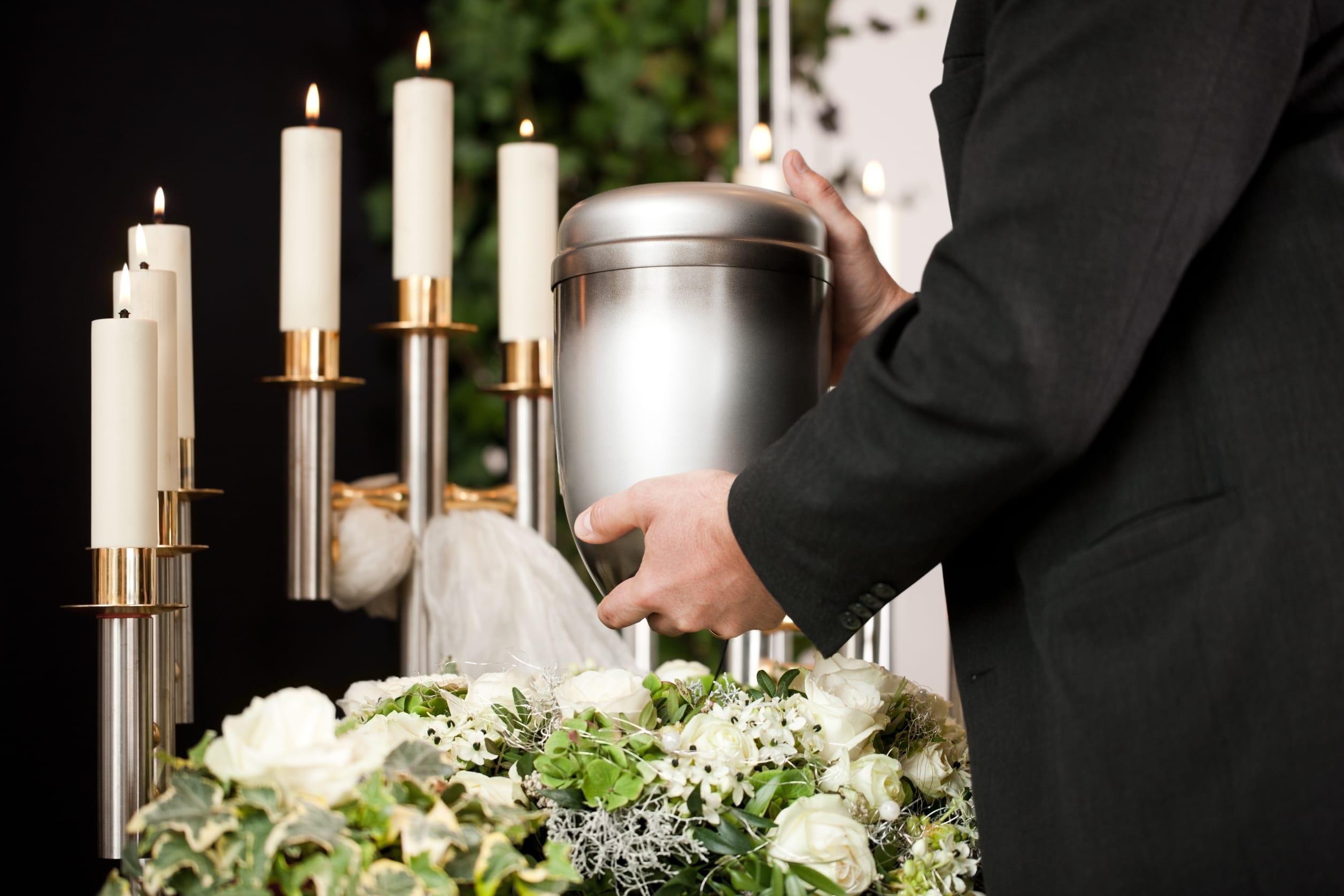
The most common misunderstanding about cremation is that it rules out a funeral. It does not. Anything you could hold with burial you can hold with cremation, in one of two orders:
- Service first. Visitation and a funeral or Mass with your loved one present, in a casket you purchase or rent, and the cremation afterward.
- Service after. A memorial service or celebration of life with the urn present, held on a date that lets family travel.
Military honors, clergy, music, pallbearers, a procession, a graveside committal — all of it remains available. The choice of cremation changes the sequence, not what is possible.
What Happens to the Cremated Remains
Cremated remains are returned to your family in the urn or container you choose. The rule of thumb in the trade is about one cubic inch of capacity per pound of body weight, which is why a standard adult urn holds around two hundred cubic inches.
From there, the choices are yours:
- Interment in a cemetery plot or a columbarium niche, with a marker
- Keeping the urn at home
- Dividing a portion among family in keepsake urns or in jewelry
- Scattering
If scattering is the plan, check first. Private land needs the owner’s permission. National forest and other public land generally requires permission from the office that manages it. Cemeteries have their own rules, and so do some churches. We would rather help you find out now than have your family discover it on the day.